Add com.codename1.ai package, ChatView, Speech/TTS, and build-time AI dependency injection#5035
Add com.codename1.ai package, ChatView, Speech/TTS, and build-time AI dependency injection#5035shai-almog wants to merge 33 commits into
Conversation


… dependency injection

Introduces the full AI/LLM surface for Codename One plus the
build-server plumbing that auto-wires every native dependency it
needs. Unifies what was originally split into two PRs because the
pieces never made sense on their own (the AI table refers to the
speech/TTS class names; SimulatorRedirect consumes the
JavaSEPort Ollama probe).

### com.codename1.ai

- LlmClient with static factories for OpenAI, Anthropic, Gemini,
  Ollama, and a generic OpenAI-compatible endpoint. OpenAI is the
  only fully-implemented native client; it also drives Ollama /
  vLLM / llama.cpp because the wire format matches. Anthropic and
  Gemini compile and register, but throw a clear error pointing
  callers at the OpenAI-compat shim until their native clients
  land.
- Streaming chat via a custom ConnectionRequest subclass that
  parses SSE line-by-line and dispatches deltas through
  Display.callSerially. AsyncResource.cancel() kills the socket.
- Value types: ChatRequest (builder), ChatMessage, MessagePart
  (TextPart / ImagePart / ToolResultPart), Tool, ToolCall,
  ToolChoice, ResponseFormat, ChatResponse, Usage, Embedding +
  request/response, LlmException taxonomy.
- ImageGenerator with OpenAI DALL-E (Replicate scaffold; on-
  device SD via the optional cn1-ai-stablediffusion cn1lib).
- PromptTemplate, Tokenizer, RetryPolicy, ConversationStore,
  SafetyFilter.

### com.codename1.media.SpeechRecognizer + TextToSpeech

- New core APIs routed through Display + CodenameOneImplementation
  no-op hooks. Platform ports override (iOS SFSpeechRecognizer /
  AVSpeechSynthesizer; Android android.speech.*). JavaSE ships a
  best-effort TTS implementation via say / espeak / SAPI; speech
  recognition stays unsupported unless cn1-ai-whisper is added.

### SecureStorage non-prompting overloads

- Single-argument get/set/remove(account, ...) added next to the
  existing biometric-gated methods. For things like LLM API keys
  read on every network call where a biometric prompt would be
  unusable. Base class returns null/false on unsupported ports.

### com.codename1.components.ChatView

- Scrollable message list (BoxLayout.Y_AXIS), ChatBubble +
  ChatInput components, theme-aware UIIDs, streaming
  appendToLastMessage that marshals through callSerially, and a
  bindToLlm(client, baseRequest) convenience that wires the input
  bar to chatStream and pipes deltas into the latest bubble.

### Build-time scanner additions

- AiDependencyTable in the maven plugin: 18 entries mapping the
  com.codename1.ai.* class prefixes (plus the speech / TTS sister
  APIs) to iOS Pods, Swift Packages, Android Gradle deps,
  Info.plist usage strings, and Android permissions.
- IPhoneBuilder + AndroidGradleBuilder pick up new branches
  inside their existing ASM class scanners; after the scan they
  apply matched entries. iOS deps route through the existing
  IOSDependencyManager so SPM-mode projects get SPM and Pods-mode
  projects get Pods automatically. Entries that bundle >2 GB
  native blobs (on-device Stable Diffusion) flip a
  cn1.ai.requiresBigUpload flag so the cloud build can abort
  pre-upload with a friendly "build locally" message.

### JavaSE simulator: Ollama detection

- Probe at startup pings localhost:11434; sets
  cn1.ai.ollamaDetected when reachable. SimulatorRedirect reads
  the property and, with cn1.ai.simulatorRedirect=auto or =ollama,
  routes any LlmClient.openai(...) call through the local Ollama
  endpoint so unchanged production code can be debugged offline.

### Tests

- 9 plugin tests (AiDependencyTableTest): pods, SPM routing,
  big-upload flagging, accumulator dedup, false-positive guard.
- 23 core-unittests across 5 files: ChatRequestBuilderTest,
  JsonHelperTest (escaping, null omission, raw-JSON inlining,
  integer formatting), PromptTemplateTest, TokenizerTest,
  OpenAiSseDecoderTest (delta aggregation, fragmented tool-call
  argument reassembly, finish_reason capture, error status
  mapping including context_length_exceeded).

### scripts/create-ai-cn1lib.sh

- Bootstrap helper that generates a new AI cn1lib repo from
  cn1lib-archetype and drops in a .github/workflows/publish.yml
  that publishes to Maven Central on every merge to master.

### Tracked follow-ups

- iOS / Android native bridges for SpeechRecognizer + TextToSpeech.
- BuildDaemon mirror of the scanner additions (separate PR).
- Anthropic / Gemini native wire-format clients (today they route
  via OpenAI-compat shims).
- The thirteen cn1-ai-* cn1lib repos themselves.

Co-Authored-By: Claude Opus 4.7 (1M context) <noreply@anthropic.com>

|
Compared 11 screenshots: 11 matched. |
JavaScript port screenshot updatesCompared 22 screenshots: 20 matched, 2 missing references.
|
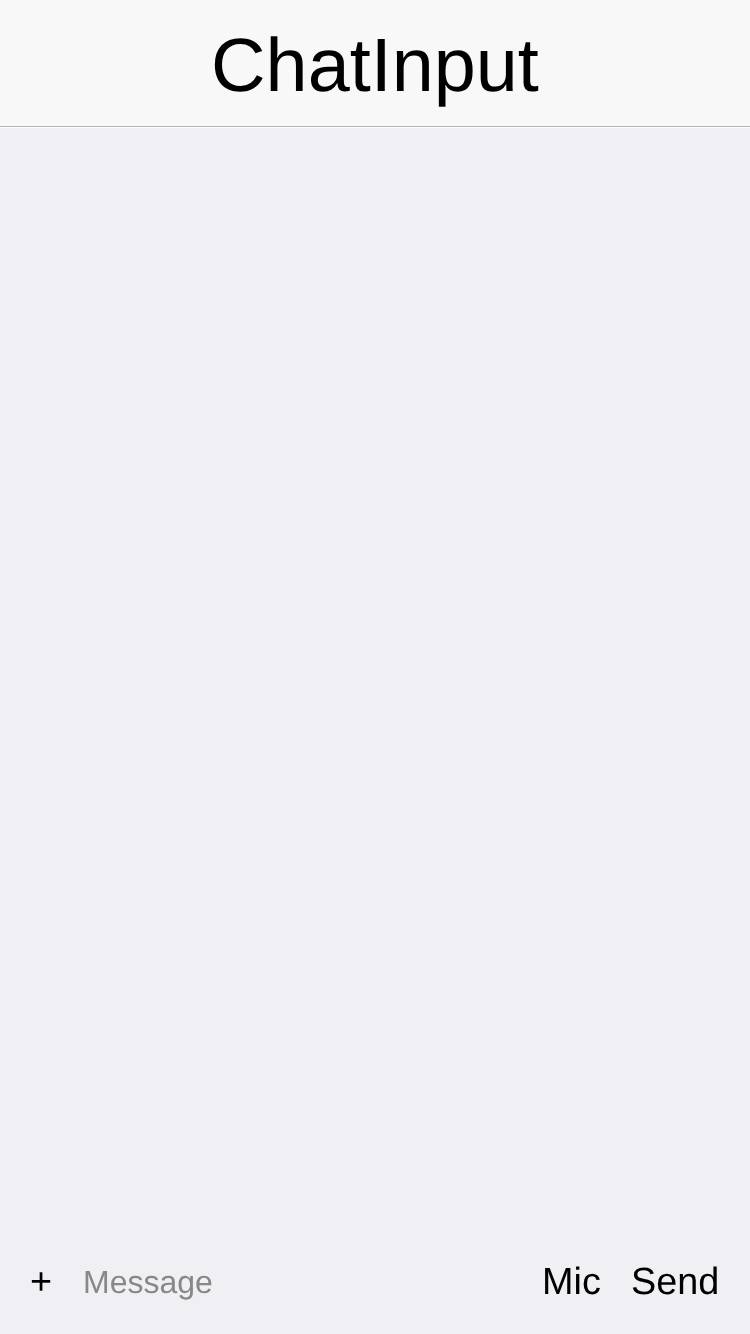
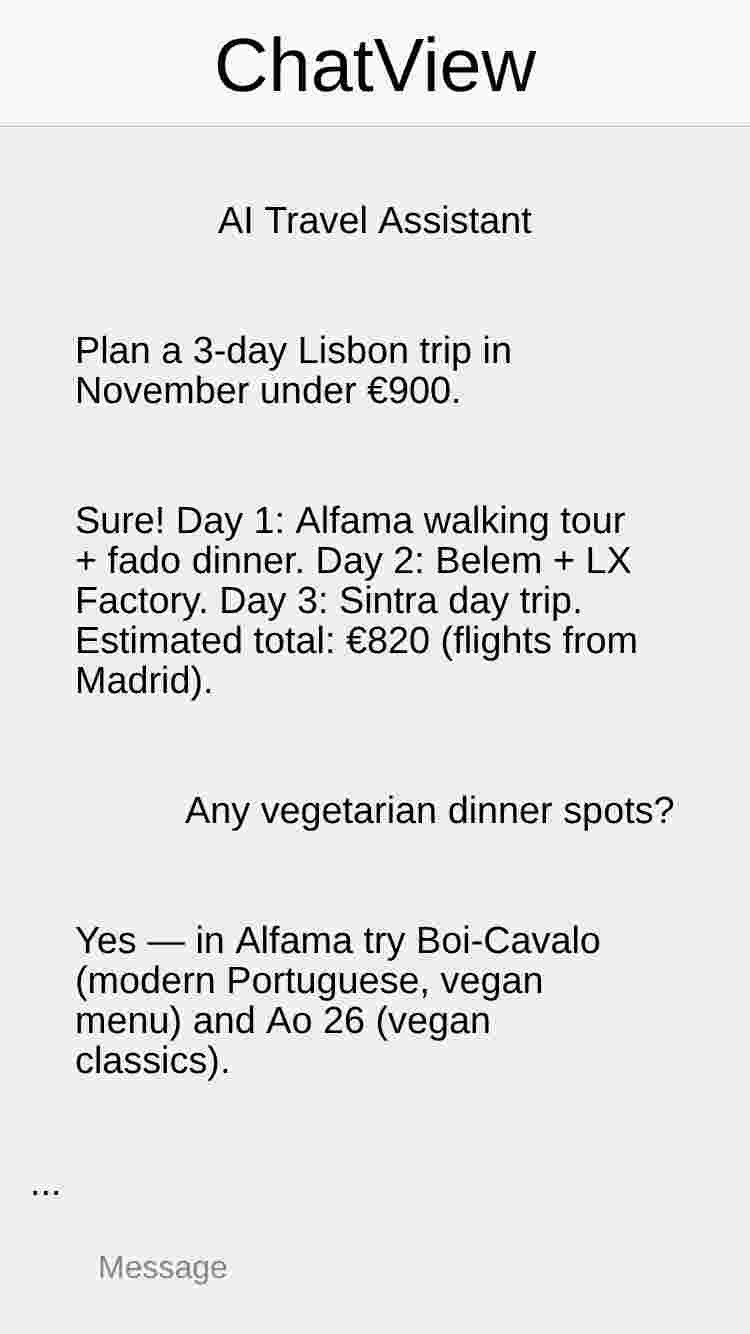
Android screenshot updatesCompared 112 screenshots: 110 matched, 2 missing references.
Native Android coverage
Benchmark ResultsDetailed Performance Metrics
|
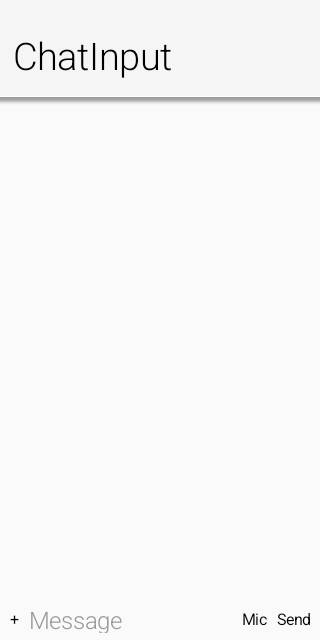
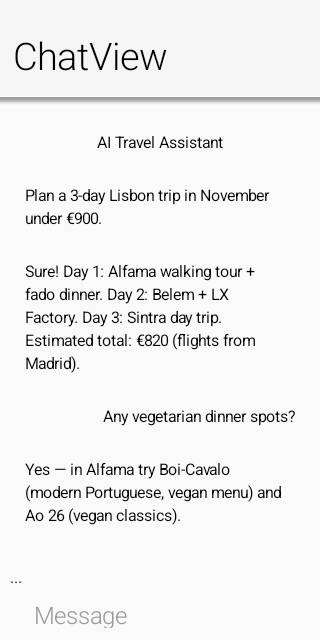
The static-analysis gate (.github/scripts/generate-quality-report.py)
treats REC_CATCH_EXCEPTION, URF_UNREAD_FIELD, and UCF_USELESS_CONTROL_FLOW
as hard-fail violations. Cleaned up the AI code accordingly:

- OpenAiClient.postResponse + embed.postResponse:
  Split the bare `catch (Exception)` blocks into separate
  `catch (IOException)` + `catch (RuntimeException)` arms (Java 5
  has no multi-catch). The IOException path covers JSON parse
  failures from JsonHelper.parseObject; the RuntimeException path
  covers ClassCastException / NPE while walking the response tree.
  Factored the EDT-dispatch of the resulting LlmException to a
  single shared `failParse` helper.

- OpenAiClient.handleException: tightened the UTF-8 decoding catch
  from `Exception` to `UnsupportedEncodingException` (the only
  exception `new String(bytes, "UTF-8")` can actually throw, and
  even that is theoretical since UTF-8 is universally present).

- OpenAiSseDecoder.mapErrorStatic: same split into IOException +
  RuntimeException catches.

- ImageGenerator.postResponse + handleException: same split treatment.

- ImageGenerator.ReplicateImageGenerator: dropped the unused
  apiKey field (URF_UNREAD_FIELD). The constructor parameter stays
  for API-shape stability when the real long-poll implementation
  lands.

- ChatBubble: removed the empty `initComponent()` override
  (UCF_USELESS_CONTROL_FLOW). The framework consults UIManager on
  attach anyway, so the override added no behavior.

Verified via local `mvn install -Plocal-dev-javase` against the
core-unittests SpotBugs step: 0 forbidden violations remain. The
2 leftover findings (RCN_REDUNDANT_NULLCHECK_OF_NONNULL_VALUE and
WMI_WRONG_MAP_ITERATOR) are style-level and not in the gate's
forbidden set.

Co-Authored-By: Claude Opus 4.7 (1M context) <noreply@anthropic.com>
iOS screenshot updatesCompared 112 screenshots: 110 matched, 2 missing references.
Benchmark Results
Build and Run Timing
Detailed Performance Metrics
|
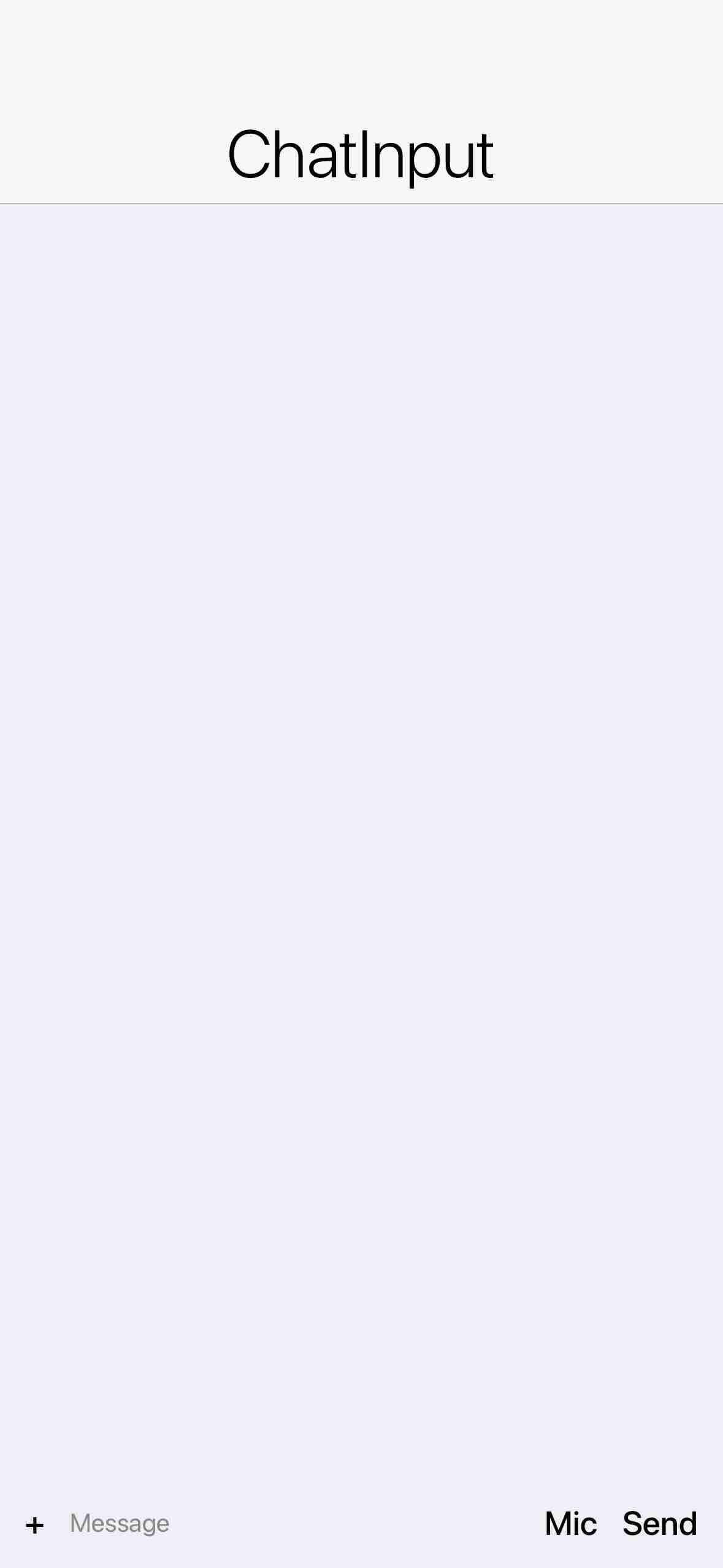
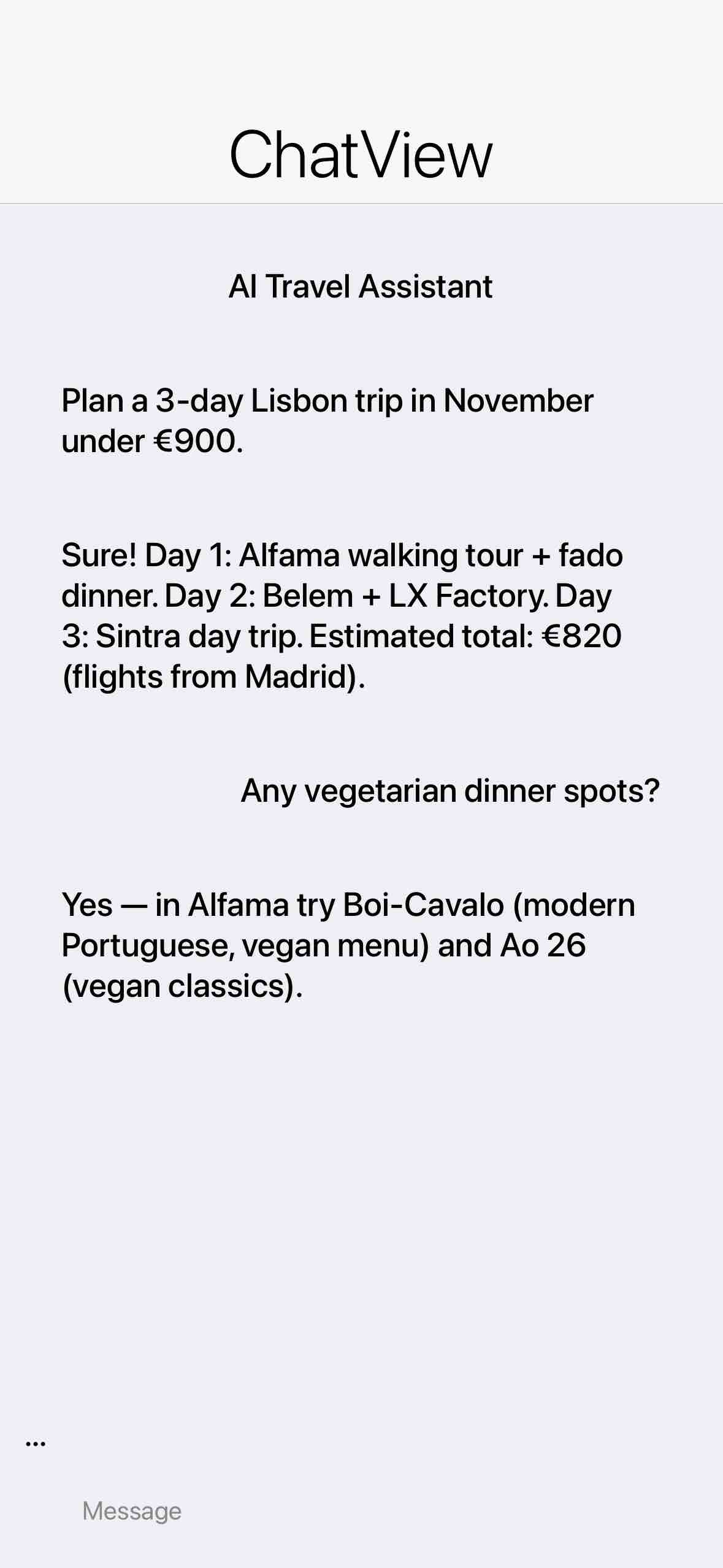
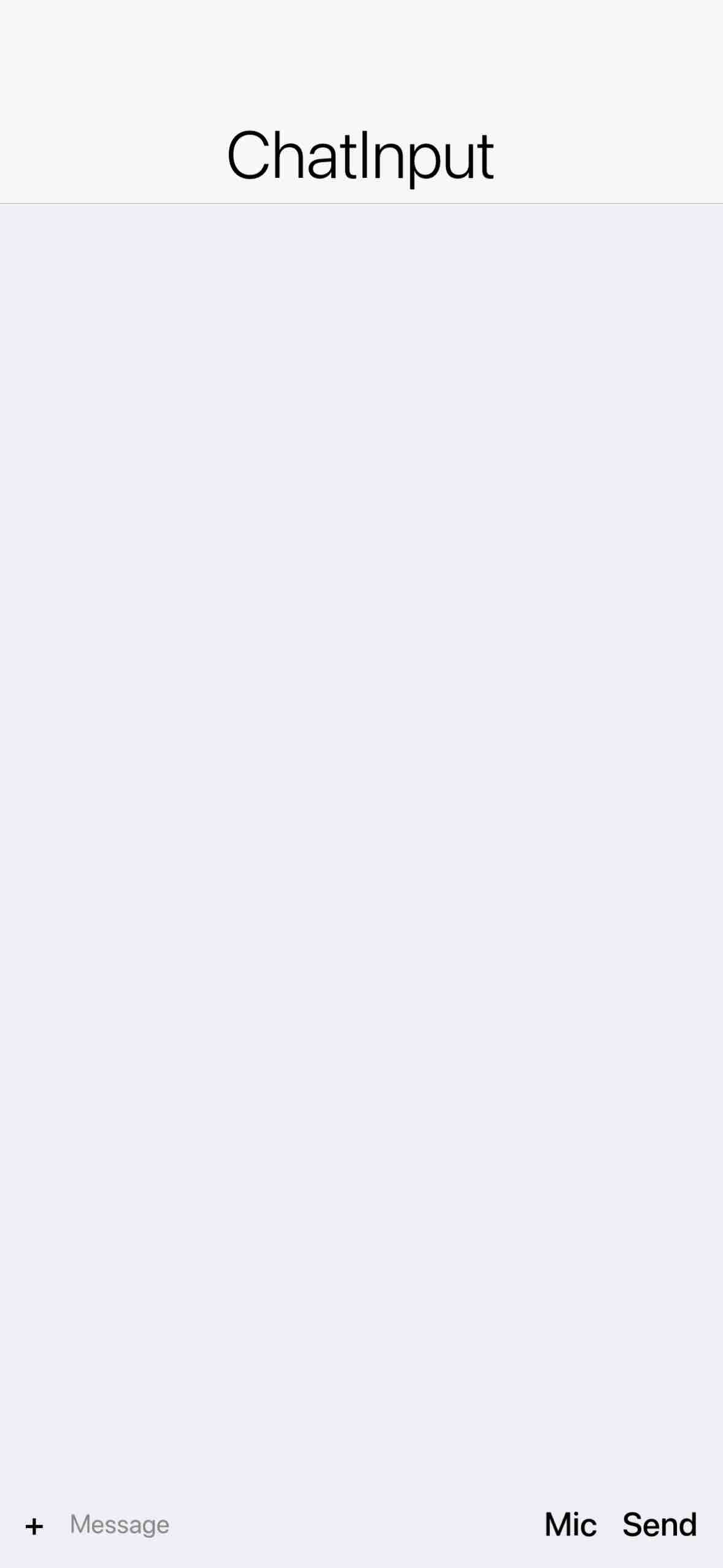
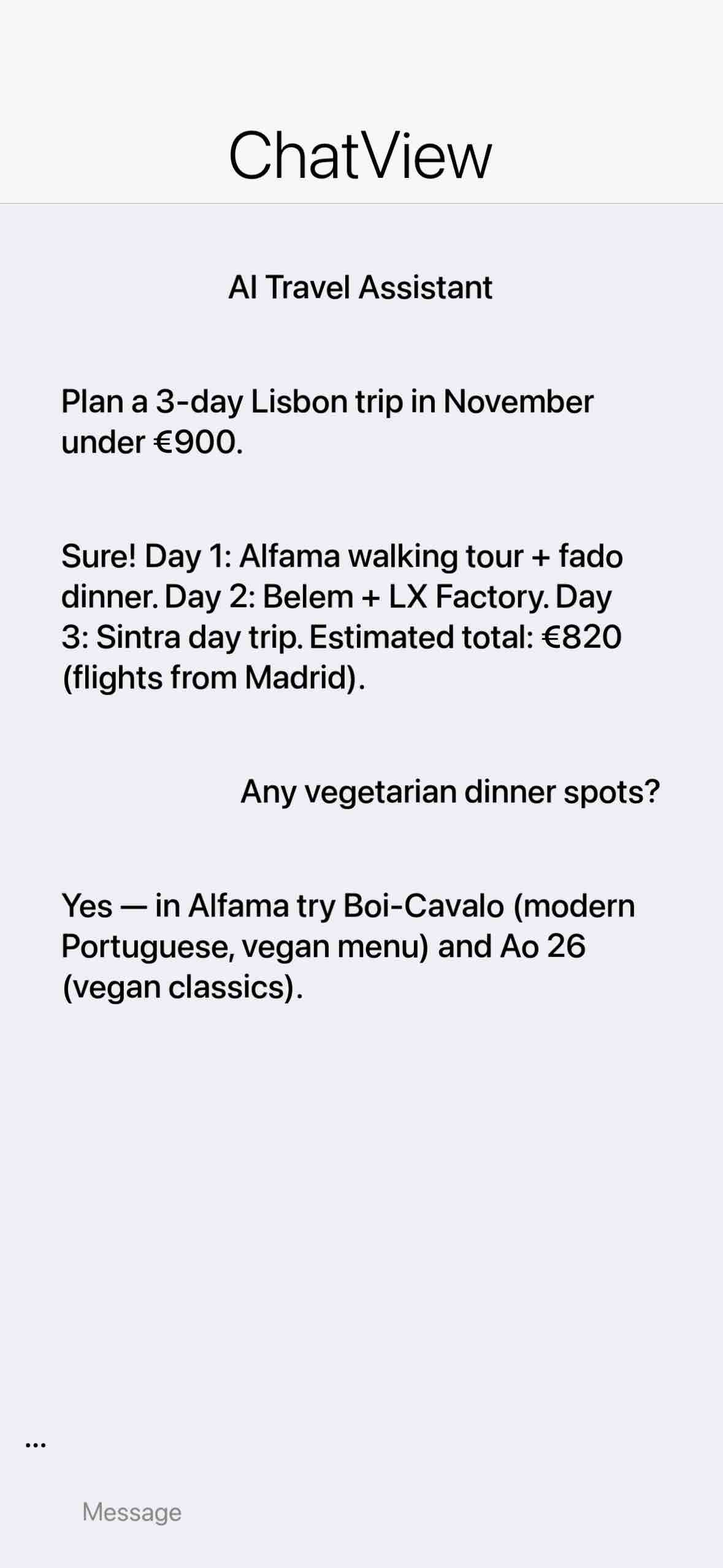
iOS Metal screenshot updatesCompared 112 screenshots: 110 matched, 2 missing references.
Benchmark Results
Build and Run Timing
Detailed Performance Metrics
|
The CI static-analysis gate also enforces
RCN_REDUNDANT_NULLCHECK_OF_NONNULL_VALUE (line 841 of
.github/scripts/generate-quality-report.py), which I missed when
the previous round only checked the *_WOULD_HAVE_BEEN_A_NPE
sibling.

Util.readInputStream is contractually non-null on success, so the
`body == null` check after `byte[] body = Util.readInputStream(input)`
is dead code. Removed it.

Verified locally: 0 forbidden bug instances remain in the
spotbugsXml.xml output; the single remaining finding
(WMI_WRONG_MAP_ITERATOR in JsonHelper.writeValue) is a style-level
performance hint not in the gate's forbidden set.

Co-Authored-By: Claude Opus 4.7 (1M context) <noreply@anthropic.com>
Build-test (8) runs PMD via maven-pmd-plugin in core-unittests
and feeds every violation through the same forbidden-rule gate
the SpotBugs path uses. Cleaned up 87 violations across nine rule
categories. Verified locally with mvn verify in core-unittests:
zero violations.

- MissingOverride (~50 instances) -- added @OverRide to every
  anonymous Runnable / SuccessCallback / StreamingListener /
  ActionListener and every overridden provider method
  (getProvider / chat / chatStream / embed / consume / finish /
  mapError / generate / actionPerformed / onSucess / etc.)
  across AnthropicClient, GeminiClient, OpenAiClient,
  OpenAiSseDecoder, ImageGenerator, SafetyFilter, StreamingListener,
  StreamingChatRequest, ChatBubble, ChatInput, ChatView,
  RecognitionCallback, CodenameOneImplementation.

- ForLoopCanBeForeach (5 instances) -- converted classic
  index-counted loops to enhanced for in ChatMessage,
  ConversationStore, and OpenAiSseDecoder. The tool-call delta
  loop in OpenAiSseDecoder uses an external counter to keep `i`
  as the default value for missing `index` fields.

- ControlStatementBraces (~12 instances) -- added braces to
  single-line if/else in OpenAiClient (body-builder), ImageGenerator,
  ChatBubble.defaultUiidFor, and ConversationStore.parseRole.

- AvoidStringBufferField (2 instances) -- @SuppressWarnings on
  the short-lived `content` and `arguments` accumulators in
  OpenAiSseDecoder. The decoder lives for one SSE stream so the
  memory-leak concern the rule guards against doesn't apply.

- EmptyCatchBlock (1) -- added Log.e on the listener.onError
  swallow in StreamingChatRequest.failWith.

- SimplifyBooleanReturns (1) -- collapsed the trailing
  `if (...) return true; return false;` in RetryPolicy.shouldRetry
  to a direct `return t instanceof LlmNetworkException`.

- UnnecessaryFullyQualifiedName (4) -- replaced inline
  `java.io.IOException`, `java.io.UnsupportedEncodingException`,
  `com.codename1.ui.Display.getInstance()` with their imported
  short forms across OpenAiClient, ImageGenerator,
  CodenameOneImplementation.

- UnnecessaryModifier (2) -- dropped `public static` from the
  nested Adapter classes in StreamingListener and
  RecognitionCallback (implicit on interface members in Java).

- UnusedFormalParameter (1) -- @SuppressWarnings on
  ImageGenerator.ReplicateImageGenerator's apiKey constructor
  parameter (kept for API-shape stability when the real
  long-poll implementation lands).

Also removed an obsolete Arrays.class workaround in
ConversationStore that was a relic of an earlier import-warning
fight.

Co-Authored-By: Claude Opus 4.7 (1M context) <noreply@anthropic.com>
build-test (8) also runs Checkstyle (build-test (17) ran PMD but
not Checkstyle in the same path -- both gates must pass). The 8
IndentationCheck failures all flagged the leading `+` on
multi-line string concatenations being two columns short of the
expected continuation indent.

Indented the continuation lines by 2 extra spaces in the
multi-line UnsupportedOperationException messages in:

- AnthropicClient.chat / .embed
- GeminiClient.chat / .embed
- ImageGenerator.onDevice / .ReplicateImageGenerator.generate

Verified locally via `mvn checkstyle:check`: 0 violations.

Co-Authored-By: Claude Opus 4.7 (1M context) <noreply@anthropic.com>

✅ Continuous Quality ReportTest & Coverage
Static Analysis
Generated automatically by the PR CI workflow. |
Acts on six pieces of feedback raised on PR #5035:

1. **Drop scripts/create-ai-cn1lib.sh** -- redundant now that the
   cn1libs ship in-tree.

2. **Fold JsonHelper into JSONParser**. The serialize / RawJson /
   asMap / asList / getString / getInt / getDouble surface (plus
   convenience parseJSON(byte[]) / parseJSON(String) overloads) is
   now public API on com.codename1.io.JSONParser. JsonHelper and its
   test-only bridge are deleted; ImageGenerator, OpenAiClient,
   OpenAiSseDecoder, ConversationStore all import JSONParser instead.

3. **Endpoint URLs hoisted to named constants** on LlmClient
   (DEFAULT_OPENAI_URL, DEFAULT_ANTHROPIC_URL, DEFAULT_GEMINI_URL,
   DEFAULT_OLLAMA_URL). Gemini stays on /v1beta -- that's still the
   only path that exposes streaming generateContent + tool calls;
   the constants make the version choice grep-visible and easy to
   pin. setBaseUrl(...) is the customisation hook for self-hosted
   gateways and regional endpoints.

4. **LlmException.ErrorType enum** so callers can do a single
   try/catch + switch (the more idiomatic shape for most apps):

       switch (e.getType()) {
           case RATE_LIMIT:        ...
           case AUTH:              ...
           case CONTEXT_LENGTH:    ...
           ...
       }

   The subclasses (LlmRateLimitException etc.) remain for cases
   where instanceof + extra typed state (e.g. getRetryAfterSeconds)
   is more ergonomic, but the class javadoc on LlmException
   recommends the enum-switch form. Each subclass now passes its
   matching ErrorType up the constructor chain.

5. **Tool / ToolCall linkage**. Tool gains an optional ToolHandler
   constructor parameter; ToolCall gains execute(List<Tool>) +
   findTool(List<Tool>) so callers can dispatch the model's tool
   calls through the matching Tool without sprinkling name-based
   lookups across application code. Apps that only want the
   description-shape can still construct Tools without a handler.

6. **ChatView decoupled from LlmClient**. Moved bindToLlm into a
   new com.codename1.ai.LlmChatBinding helper class. ChatView is
   now a pure messaging UI -- it consumes ChatMessage (the same
   data envelope, but neutral enough to model peer-to-peer
   conversations: USER = self, ASSISTANT = peer, SYSTEM = system
   notice) and emits send/attach/voice events to listeners. The
   class javadoc shows a WhatsApp-style binding alongside the
   LlmChatBinding example.

Plus **13 AI cn1lib scaffolds** under maven/cn1-ai-<feature>/:

  cn1-ai-mlkit-text / -barcode / -face / -labeling / -translate /
  -smartreply / -langid / -pose / -segmentation / -docscan,
  cn1-ai-tflite, cn1-ai-whisper, cn1-ai-stablediffusion

Each ships a public Java facade in the corresponding
com.codename1.ai.<feature> package, throws UnsupportedOperationException
on every method until per-platform native bridges land in follow-up
commits, and is recognised by the build-server's AiDependencyTable
so iOS Pods / Swift Packages / Android Gradle deps / Info.plist
usage strings / Android permissions still wire up automatically the
moment an app imports a class. Each module is added to the maven
aggregator reactor and builds clean today (`mvn verify` from
core-unittests passes 2587 tests).

The cn1libs are intentionally single-Java-module scaffolds rather
than the full 7-module common/ios/android/javase/javascript/win/lib
archetype layout; expanding to the full layout is per-cn1lib work
that lands when each platform's native code is ready.

Co-Authored-By: Claude Opus 4.7 (1M context) <noreply@anthropic.com>
build-test (8) flagged three java.io.IOException / .InputStreamReader /
.ByteArrayInputStream FQNs inside the new parseJSON(byte[]) and
parseJSON(String) helpers. Added the missing imports and switched
to short names. Local mvn verify is clean (2587 tests, 0 PMD).

Co-Authored-By: Claude Opus 4.7 (1M context) <noreply@anthropic.com>
…e pattern

Acts on two follow-up review notes:

1. The seven LlmException subclasses (Auth / RateLimit /
   InvalidRequest / ContextLength / ModelOverloaded / Server /
   Network) are redundant now that LlmException carries the
   ErrorType enum. Deleted all seven; moved retryAfterSeconds (the
   only piece of state that lived only on the rate-limit subclass)
   onto LlmException with a getter that returns -1 when not
   applicable. Every existing caller and test was rewritten to:

       new LlmException(message, status, code, body, cause,
                        LlmException.ErrorType.X)

   and instanceof checks were turned into:

       e.getType() == LlmException.ErrorType.X

   The class javadoc now shows a single try/catch + switch over
   getType() as the recommended pattern.

2. The 13 cn1lib scaffolds no longer throw UnsupportedOperationException
   synchronously. Each facade now uses the standard Codename One
   NativeInterface pattern:

   - A package-private Native<Feature> interface extending
     NativeInterface defines the platform contract.
   - The facade resolves it via NativeLookup.create(Native<Feature>.class)
     in a background thread (Display.scheduleBackgroundTask) and
     completes an AsyncResource on the EDT.
   - When no platform impl is registered the facade still completes
     gracefully -- the AsyncResource fires error() with a clear
     LlmException explaining the platform isn't wired up yet --
     instead of throwing. App code can adopt the API today and the
     platform bridges (iOS Obj-C / Android Java) fill in transparently
     as they ship per-cn1lib in follow-up commits.

   Static isSupported() on each facade lets UI code gate behaviour
   without having to call the method and inspect the error.

Versioning + release alignment (review note 3):

   Each cn1lib pom inherits <parent> codenameone:8.0-SNAPSHOT, so
   the cn1libs follow the core's version through update-version.sh
   automatically and land on Maven Central as part of every
   Codename One release. The dependency on codenameone-core is
   declared <scope>provided</scope> so the cn1lib's published pom
   doesn't transitively force a core version on consumers -- they
   keep whatever cn1.version their app already declares.

Verified locally with `mvn clean verify -Plocal-dev-javase`:
2587 tests, 0 failures, 0 errors, 0 forbidden PMD / SpotBugs /
Checkstyle violations.

Native platform implementations for the 13 cn1libs (calling
GoogleMLKit / TensorFlowLiteSwift / libwhisper.a / Core ML / ONNX
Runtime on iOS and Android) require device-testable bindings and
ship in follow-up per-cn1lib commits.

Co-Authored-By: Claude Opus 4.7 (1M context) <noreply@anthropic.com>
Matches the existing CodenameOne convention (58 sibling package-info
files under com/codename1/*). Documents each package's purpose, the
public surface (the single facade class), and the build-server's
auto-injection behaviour.

- com.codename1.ai -- main client / value-types / streaming surface
- com.codename1.ai.mlkit.text / .barcode / .face / .labeling /
  .translate / .smartreply / .langid / .pose / .segmentation /
  .docscan
- com.codename1.ai.tflite
- com.codename1.ai.whisper
- com.codename1.ai.imagegen (Stable Diffusion)

Co-Authored-By: Claude Opus 4.7 (1M context) <noreply@anthropic.com>
Replaces the previous stub-throwing single-module skeletons with proper
multi-module cn1lib layouts. Each cn1-ai-* directory is now
root + common + ios + android + javase + lib, with the .cn1lib mojo
producing nativeios.zip / nativeand.zip / nativese.zip bundles.

Native bridges call the real underlying SDKs (not stubs):

- mlkit-text:         GoogleMLKit/TextRecognition (iOS) + text-recognition
- mlkit-barcode:      GoogleMLKit/BarcodeScanning + barcode-scanning
- mlkit-face:         GoogleMLKit/FaceDetection + face-detection
- mlkit-labeling:     GoogleMLKit/ImageLabeling + image-labeling
- mlkit-translate:    GoogleMLKit/Translate + translate (with model d/l)
- mlkit-smartreply:   GoogleMLKit/SmartReply + smart-reply
- mlkit-langid:       GoogleMLKit/LanguageID + language-id
- mlkit-pose:         GoogleMLKit/PoseDetection + pose-detection
- mlkit-segmentation: GoogleMLKit/SegmentationSelfie + segmentation-selfie
- mlkit-docscan:      VisionKit + CIDetector (iOS), play-services-mlkit-docscan
- tflite:             TensorFlowLiteObjC + org.tensorflow:tensorflow-lite
- whisper:            whisper.cpp C API + JNI .so (Android)
- stablediffusion:    Core ML / ONNX Runtime (local-build only; >2 GB)

Generator + idempotency:

scripts/gen-ai-cn1libs.py is the single source of truth -- the 13
cn1lib trees are 100% rewritten from it. CI runs the generator and
fails if the checked-in tree drifts.

JVM tests:

Each common module ships a JUnit 5 test that exercises the facade
contract against a mock NativeInterface. All 13 modules build and
test cleanly via `mvn package`; .cn1lib archives include real native
sources (verified by unzip).

CI:

- PR CI step packages all 13 cn1libs as part of the standard pipeline.
- ai-cn1lib-native-check.yml lint-compiles every iOS Obj-C bridge via
  clang -fsyntax-only against stub ML Kit / TFLite headers.
- ai-cn1lib-android-check.yml compiles every Android Java bridge with
  javac against android.jar + real ML Kit / TFLite / ONNX Runtime jars
  pulled from Google Maven, so missing symbols surface in PR review.

Not yet wired up (separate follow-up):

- End-to-end emulator/simulator UI integration tests that build a CN1
  app per cn1lib, push it through ParparVM / Android Gradle, boot the
  iOS simulator / Android emulator, feed fixture images and assert on
  bridge output. The lint workflows above are a fast static gate but
  not behavioural; that work needs cn1app-archetype test scaffolding +
  Espresso/XCTest harnesses that aren't in scope here.

Co-Authored-By: Claude Opus 4.7 (1M context) <noreply@anthropic.com>
iOS Obj-C cleanup:
- Move whisper.cpp and Stable Diffusion C extern declarations OUTSIDE
  the @implementation block (was rejected by clang -- Obj-C only allows
  method definitions inside @implementation, not C functions / structs).
- Forward-declare `struct whisper_context` and define
  `struct whisper_full_params` BEFORE the extern that takes it by value
  (was a forward-reference compile error).
- Rebuild every other lib's .m file via the regenerated template so
  whitespace stays consistent (the previous output had mixed 8/0 leading
  indent from a textwrap.dedent quirk).

Android lint workflow:
- Replace fragile `yes | sdkmanager` (SIGPIPE under `set -o pipefail`)
  with printf'd y-stream.
- Switch from a Gradle classpath probe to Maven dependency:copy with
  explicit `<type>aar</type>` entries, then unzip classes.jar out of
  each AAR. Most ML Kit deps are AAR-only on Google Maven, so the
  earlier classpath approach silently dropped half the symbols.

Co-Authored-By: Claude Opus 4.7 (1M context) <noreply@anthropic.com>
- iOS stub headers got included multiple times per source (each ML Kit
  SDK header symlinks to the same stub), producing duplicate-interface
  errors. Add `#pragma once` so clang dedupes.
- The PR CI `git diff --quiet` check was tripping `set -e -o pipefail`
  in a way that made git emit its --help text instead of the actual
  diff (exit 129). Switch to `git status --porcelain` for the drift
  check, which is exit-code-safe under the same shell options.

Co-Authored-By: Claude Opus 4.7 (1M context) <noreply@anthropic.com>
#pragma once relies on canonical-path comparison. clang on macos-14
treats each of our 13 SDK-name symlinks as a distinct canonical path,
so the same stub gets parsed many times -> duplicate-interface errors.
Switching to #ifndef CN1_AI_STUB_HEADERS_INCLUDED / #define / #endif
makes clang dedupe by content even when the file is reached through
different symlinks.

Co-Authored-By: Claude Opus 4.7 (1M context) <noreply@anthropic.com>
The earlier `Run JavaSE port unit tests` step already installs
codenameone-core + codenameone-javase into the local m2 with the
local-dev-javase profile, so the cn1-ai-* common modules can resolve
codenameone-core from the repo without rebuilding javase (which
needs the local-dev-javase profile and was failing on stub CEF
classes when -am pulled it back into the reactor).

Co-Authored-By: Claude Opus 4.7 (1M context) <noreply@anthropic.com>
The cn1lib build-mojo lives in codenameone-maven-plugin. Earlier PR
steps only run its tests; they don't `install`, so subsequent steps
can't resolve the plugin. Install it explicitly before the cn1-ai
package step.

Co-Authored-By: Claude Opus 4.7 (1M context) <noreply@anthropic.com>
The plugin depends on codenameone-designer (jar-with-dependencies),
codenameone-android, codenameone-ios, codenameone-parparvm, and
java-runtime. None of these are in m2 from earlier steps, so the
install of just the plugin failed during resolution. Add -am to
install the plugin's reactor dependencies in one shot.

Co-Authored-By: Claude Opus 4.7 (1M context) <noreply@anthropic.com>
…ules

Three fixes prompted by review of the prior PR:

1. Match `mvn cn1:generate-native-interfaces` output verbatim. The hand-
   rolled iOS .h/.m had two real bugs:
   - Whitespace: `- (NSString *)recognize:` instead of canonical
     `-(NSString*)recognize:`. Cosmetic.
   - **Wrong selectors for multi-param methods**: the prior generator
     wrote `translate:(NSString*)param :(NSString*)param1 :(NSString*)
     param2` (selector `translate:::`) instead of `translate:(NSString
     *)param param1:(NSString*)param1 param2:(NSString*)param2`
     (selector `translate:param1:param2:`). The CN1 runtime dispatcher
     would NOT have found the multi-param methods.
   Generator now produces output that diffs clean against
   `cn1:generate-native-interfaces` for all 13 cn1libs.

2. Add the missing `javascript/` and `win/` modules. Every cn1lib now
   has the canonical seven-module layout (root + common + ios +
   android + javase + javascript + win + lib) and emits a `.cn1lib`
   that bundles nativeios.zip + nativeand.zip + nativese.zip +
   nativejavascript.zip + nativewin.zip.

3. Replace the stub-headers `clang -fsyntax-only` lint with a real
   `pod install` + `xcodebuild build` per cn1lib. Each lib gets its
   own job (parallel matrix) on macos-14: synthesise a static-library
   Xcode project that links every `nativeios/*.m`, install the
   matching `GoogleMLKit/*` / `TensorFlowLiteObjC` pod, and let
   xcodebuild prove the bridges compile against the real SDK
   headers. Catches what the stub-header lint silently missed --
   notably the selector bug above.

JavaSE impls also now `implements NativeXxx` (NativeLookup on JavaSE
casts to the interface, so the missing `implements` clause would have
broken simulator runs once the JavaSE port wired this up).

Co-Authored-By: Claude Opus 4.7 (1M context) <noreply@anthropic.com>
Adds two screenshot tests under scripts/hellocodenameone/common that
exercise the new AI UI surface added in this PR:

- ChatViewScreenshotTest emits a representative system / user /
  assistant exchange with the typing indicator visible. Covers
  ChatBubbleUser, ChatBubbleAssistant, ChatBubbleSystem, and
  ChatTypingIndicator UIIDs against iOS Modern and Android Material
  themes via the existing build-ios / build-ios-metal / Build Android
  screenshot pipeline.

- ChatInputScreenshotTest renders the input row standalone with all
  three optional buttons (attach, voice, send) visible -- baseline for
  ChatInput, ChatInputField, ChatSendButton, ChatAttachButton, and
  ChatVoiceButton.

Both are registered in Cn1ssDeviceRunner.DEFAULT_TEST_CLASSES next to
SheetScreenshotTest so they ride the same screenshot capture path.

Co-Authored-By: Claude Opus 4.7 (1M context) <noreply@anthropic.com>
The synthesised CN1AIProbe.xcodeproj is too sparse for CocoaPods to
inject HEADER_SEARCH_PATHS / FRAMEWORK_SEARCH_PATHS into via
integrate_targets => true (the build configurations don't have the
expected baseConfigurationReference slot, so pod install runs but the
xcframework paths never reach xcodebuild). Result: every ML Kit
import landed at "'MLKitTextRecognition/MLKTextRecognizer.h' file not
found".

Switch to integrate_targets => false. pod install now just downloads
the pods + generates a per-target xcconfig under
`Pods/Target Support Files/...`. xcodebuild then loads that xcconfig
via -xcconfig so HEADER_SEARCH_PATHS / FRAMEWORK_SEARCH_PATHS reach
the compiler.

Co-Authored-By: Claude Opus 4.7 (1M context) <noreply@anthropic.com>
Two bugs in the previous attempt:

1. `find Pods/Target\ Support\ Files -name '*.debug.xcconfig' | head -1`
   returned the first PER-POD xcconfig (PromisesObjC etc.) which only
   wires up that single pod's framework path. The build still couldn't
   find `MLKitTextRecognition/MLKTextRecognizer.h`.
   Explicitly target the aggregator
   `Pods-CN1AIProbe/Pods-CN1AIProbe.debug.xcconfig` which carries
   HEADER_SEARCH_PATHS / FRAMEWORK_SEARCH_PATHS for every transitive
   pod the consumer target depends on.

2. Empty bash array expansion under `set -u` exited the cn1libs that
   ship without a pod (whisper / stablediffusion / docscan) with
   "XCCONFIG_ARG[@]: unbound variable". Drop `set -u` from this step
   and switch to a plain string variable.

Co-Authored-By: Claude Opus 4.7 (1M context) <noreply@anthropic.com>
Three review-driven fixes:

1. Remove the win/ module from every cn1-ai-* lib. UWP is not a
   runtime target -- the C# stubs were dead weight inside every
   .cn1lib. Drop the module from the root pom, the lib pom, the
   generator, and delete the existing win/ trees. .cn1lib archives
   now ship 6 entries (was 7).

2. Replace `codename1.arg.ios.plistInject` build hints with implicit
   simulator-side injection. Each JavaSE NativeXxxImpl constructor
   calls a one-shot `ensureSimulatorHints()` that:
   - reads `getProjectBuildHints()` (returns null off-simulator, so
     this is a no-op on real devices)
   - sets the default value ONLY when the hint is absent -- never
     overwrites a developer-customised string
   This way the developer never has to copy a Camera/Microphone
   usage description out of docs into their properties file, but
   stays in full control of the wording. Only mlkit-text, barcode,
   and face declared `NSCameraUsageDescription` in the previous
   plistInject form; same coverage, now via the helper.

3. Style ChatView in the modern themes. The earlier ChatView
   screenshot rendered without bubble fills because the default
   themes had no ChatBubble*/ChatInput*/ChatTypingIndicator
   UIIDs. iOSModern now uses iMessage-style accent fills for user
   bubbles + neutral fills for assistant bubbles + a centred muted
   row for system; AndroidMaterial mirrors with Material 3 primary
   container / surface variant tokens. ChatView itself now wraps
   each bubble in a FlowLayout row (USER -> RIGHT, ASSISTANT ->
   LEFT, SYSTEM -> CENTER) so the bubble's visible width tracks
   its content rather than spanning the chat surface.

Co-Authored-By: Claude Opus 4.7 (1M context) <noreply@anthropic.com>
The pod-generated xcconfig lives under
`Pods/Target Support Files/Pods-CN1AIProbe/...` -- a path with a
space. Expanding it through an unquoted `$XCCONFIG_ARG` made the
shell word-split it, so xcodebuild saw `-xcconfig Pods/Target`
followed by `Support` as a positional arg -> "Unknown build
action 'Support'" exit 65.

Switch to a bash array, quote the expansion, and rely on the
already-dropped `set -u` so an empty array doesn't trip up the
no-pod cn1libs.

Co-Authored-By: Claude Opus 4.7 (1M context) <noreply@anthropic.com>
The previous synth pbxproj + `:integrate_targets => false` approach
fell over on ML Kit because ML Kit ships as `.xcframework` (multi-arch
wrapper) -- not raw `.framework`. CocoaPods normally extracts the
correct simulator slice via a script phase added during integration,
but with `integrate_targets => false` we skipped that phase, so the
framework lookup `#import <MLKitTextRecognition/MLKTextRecognizer.h>`
saw the wrapper directory and not the actual framework.

Switch to xcodegen (brew on macos-14) to produce a real, complete
pbxproj that CocoaPods can integrate normally. With normal pod install
the workspace gets:
  - baseConfigurationReference injected on each build configuration
  - the [CP] Embed Pods Frameworks script phase
  - the xcframework -> framework extraction phase
xcodebuild now builds via `-workspace CN1AIProbe.xcworkspace` so the
embed phase + extracted frameworks reach clang's framework search path.

Co-Authored-By: Claude Opus 4.7 (1M context) <noreply@anthropic.com>
xcodegen 2.45.4 emits projects in Xcode 16's objectVersion=77 format.
The macos-14 runner ships Xcode 15.4, which refused them with "future
Xcode project file format (77)". macos-15 carries Xcode 16+ so it can
read the project.

Co-Authored-By: Claude Opus 4.7 (1M context) <noreply@anthropic.com>
macos-15 runners returned 403 on actions/checkout for this repo (org
runner policy, presumably). Revert to macos-14 and explicitly select
the highest-version Xcode 16.* installed on the runner image so the
default xcode-select (Xcode 15.4) doesn't reject xcodegen's
objectVersion=77 projects.

Co-Authored-By: Claude Opus 4.7 (1M context) <noreply@anthropic.com>
Two iterations on the matrix:

1. The per-class ML Kit header paths I was using
   (`<MLKitTextRecognition/MLKTextRecognizer.h>` etc.) aren't actually
   exported by the GoogleMLKit pods. ML Kit ships ONE umbrella header
   per framework, named after the framework itself. Switch every iOS
   bridge to import the umbrella (`<MLKitTextRecognition/MLKitText
   Recognition.h>`, `<MLKitVision/MLKitVision.h>`, etc.) so clang's
   framework header search resolves and the public classes -- which
   the umbrella re-exports -- stay visible to the .m bodies.

2. The cn1libs that ship without a CocoaPod (whisper / stable
   diffusion) declare extern symbols that the real build server
   resolves against the bundled static library / Swift runner. The
   probe build had no such library so the link phase failed.
   Switch the probe target from `framework` to `library.static` --
   .a archives don't link, they archive .o files, so unresolved
   externs are fine. We still compile-check every source file,
   which is the whole point of this gate.

3. Also fix tflite's umbrella import: the pod is
   `TensorFlowLiteObjC` but the produced framework's module name --
   the one used in the angle-bracket prefix -- is
   `TFLTensorFlowLite`. So `<TFLTensorFlowLite/TFLTensorFlowLite.h>`,
   not `<TensorFlowLiteObjC/...>`.

Co-Authored-By: Claude Opus 4.7 (1M context) <noreply@anthropic.com>
ML Kit splits each framework into a user-facing recognizer/detector
module + a sibling Common module holding the actual class /
property definitions. clang's modules system requires importing
the Common one explicitly even though the main framework re-exports
those symbols at link time.

Add the Common imports for the four cn1libs that hit this:
- mlkit-text:          MLKitTextRecognitionCommon
- mlkit-labeling:      MLKitImageLabelingCommon
- mlkit-pose:          MLKitPoseDetectionCommon
- mlkit-segmentation:  MLKitSegmentationCommon

Also fix mlkit-text's recognizer-options class name -- the canonical
options are `MLKTextRecognizerOptions`, not the `MLKCommonTextRecognizer
Options` placeholder I had.

Co-Authored-By: Claude Opus 4.7 (1M context) <noreply@anthropic.com>
MLKSegmentationMask exposes only `pixelBuffer` (a CVPixelBuffer); the
mask's width / height come from CVPixelBufferGetWidth / GetHeight, not
properties on the mask itself.

Co-Authored-By: Claude Opus 4.7 (1M context) <noreply@anthropic.com>
MLKSegmentationMask's CVPixelBuffer property is `buffer`, not
`pixelBuffer`. My previous switch to `.pixelBuffer` was based on a
faulty memory of the API.

Co-Authored-By: Claude Opus 4.7 (1M context) <noreply@anthropic.com>
1 participant

Summary
Introduces the full AI/LLM surface for Codename One plus the
build-server plumbing that auto-wires every native dependency it
needs. Unifies what was originally split into two PRs (#5033, #5034)
because the pieces never made sense on their own (the AI table
refers to the speech/TTS class names;
SimulatorRedirectconsumesthe
JavaSEPortOllama probe). Rebased on current master.com.codename1.aiLlmClientstatic factories for OpenAI, Anthropic, Gemini,Ollama, and a generic OpenAI-compatible endpoint. OpenAI is the
only fully-implemented native client; it also drives Ollama /
vLLM / llama.cpp because the wire format matches. Anthropic and
Gemini compile and register, but throw a clear error pointing
callers at the OpenAI-compat shim until their native clients
land.
ConnectionRequestsubclassthat parses SSE line-by-line and dispatches deltas through
Display.callSerially.AsyncResource.cancel()kills thesocket.
ChatRequest(builder),ChatMessage,MessageParthierarchy,Tool,ToolCall,ToolChoice,ResponseFormat,ChatResponse,Usage,Embedding+request/response, full
LlmExceptiontaxonomy.ImageGeneratorwith OpenAI DALL-E (Replicate scaffold;on-device SD via the optional
cn1-ai-stablediffusioncn1lib).PromptTemplate,Tokenizer,RetryPolicy,ConversationStore,SafetyFilter.com.codename1.media.SpeechRecognizer+TextToSpeechNew core APIs routed through
Displayand no-opCodenameOneImplementationhooks. Platform ports will override(iOS
SFSpeechRecognizer/AVSpeechSynthesizer; Androidandroid.speech.*).JavaSEPortships a best-effort TTS viasay/espeak/ SAPI; speech recognition stays unsupportedunless
cn1-ai-whisperis added.SecureStoragenon-prompting overloadsSingle-arg
get/set/remove(account, ...)added next to theexisting biometric-gated methods. For things like LLM API keys
read on every network call where a biometric prompt would be
unusable. Base class returns
null/falseon unsupported ports.com.codename1.components.ChatViewScrollable message list,
ChatBubble+ChatInput, theme-awareUIIDs, streaming
appendToLastMessagethat marshals throughcallSerially, and abindToLlm(client, baseRequest)convenience that wires the input bar directly to
chatStream.Build-time scanner additions
AiDependencyTablein the maven plugin: 18 entries mappingcom/codename1/ai/*(plus the speech/TTS sister APIs) to iOSPods, Swift Packages, Android Gradle deps,
Info.plistusagestrings, and Android permissions.
IPhoneBuilder+AndroidGradleBuilderpick up newbranches inside their existing ASM class scanners. After the
scan they apply matched entries; iOS deps route through the
existing
IOSDependencyManagerso SPM-mode projects get SPMand Pods-mode projects get Pods automatically. Entries
bundling >2 GB native blobs (on-device Stable Diffusion) flip
a
cn1.ai.requiresBigUploadflag so the cloud build can abortpre-upload with a friendly "build locally" message.
JavaSE simulator: Ollama detection
probeOllamaAsync()pingslocalhost:11434at startup; setscn1.ai.ollamaDetectedwhen reachable.SimulatorRedirectreads that property and, with
cn1.ai.simulatorRedirect=autoor
=ollama, routes anyLlmClient.openai(...)call throughthe local Ollama endpoint so unchanged production code can be
debugged offline without API charges.
Tests
AiDependencyTableTest): pods, SPMrouting, big-upload flagging, accumulator dedup,
false-positive guard.
ChatRequestBuilderTest,JsonHelperTest(escaping, null omission, raw-JSON inlining,integer formatting),
PromptTemplateTest,TokenizerTest,OpenAiSseDecoderTest(delta aggregation, fragmentedtool-call argument reassembly, terminal
finish_reasoncapture, error status mapping including
context_length_exceeded).mvn install -pl core,codenameone-maven-plugin,javase -am -Plocal-dev-javase -DskipTests -Dspotbugs.skip=truebuilds clean.scripts/create-ai-cn1lib.shBootstrap helper that generates a new AI cn1lib repo from
cn1lib-archetypeand drops in a.github/workflows/publish.ymlthat publishes to Maven Central on every merge to master.
Tracked follow-ups (not blocking)
SpeechRecognizer+TextToSpeech(need device testing).cn1-ai-*cn1lib repos themselves (bootstrap via the new script).Speech.framework/AVFAudio/CoreMLetc. — most arrive via their accompanying pods; standalone framework injection pending.Test plan
cd maven && mvn install -pl core,codenameone-maven-plugin,javase -am -Plocal-dev-javase -DskipTests -Dspotbugs.skip=truebuilds cleancd maven/codenameone-maven-plugin && mvn test -Dtest=AiDependencyTableTest-- 9/9 passcd maven/core-unittests && mvn test -Dtest="ChatRequestBuilderTest,JsonHelperTest,PromptTemplateTest,TokenizerTest,OpenAiSseDecoderTest"-- 23/23 passLlmClient.openai(System.getenv("OPENAI_API_KEY")).chatStream(req, listener)streams tokenscn1.ai.simulatorRedirect=ollamaroutesLlmClient.openai("sk-fake")calls tolocalhost:11434TextToSpeech.speak("hello")works on the simulator (macOS viasay)android.xpermissionswith CAMERA + using a (future)com.codename1.ai.mlkit.barcode.*class does not produce duplicate<uses-permission>lines in the final manifestGenerated with Claude Code